You want to give your family water it can trust, and better water starts with the right treatment system. Reliant Plumbing & Heating installs water filtration and water treatment equipment for homeowners throughout Amesbury and surrounding communities. With more than 20 years of experience, we help customers improve water quality with solutions that fit their home’s needs, from water softeners and reverse osmosis systems to whole-house filtration and specialty water treatment equipment.
Build a Water Treatment System Around Your Home
Every home has different water conditions, and every family uses water differently. Some homeowners want better drinking water, while others want to reduce hard water or protect their plumbing system. The best approach starts with understanding your water and selecting equipment that addresses the issues you actually have.
Learn What’s in Your Water
Water quality can vary from one property to the next. Well water and municipal water supplies often present different challenges, including minerals, sediment, chlorine, acidity, or other contaminants. Testing your water provides valuable information that helps determine which treatment system will deliver the best results.
Choose the Right Combination of Equipment
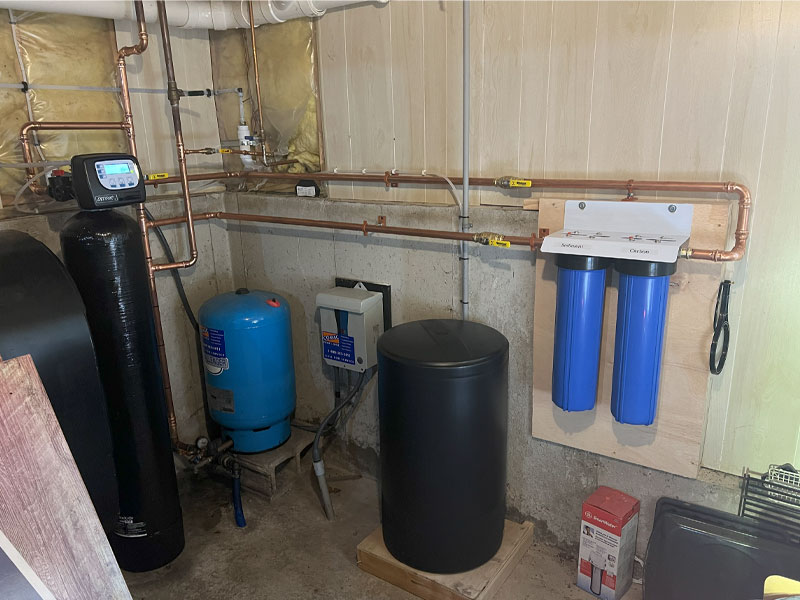
Some homes benefit from a single treatment system, while others achieve better results by combining multiple technologies. A water softener may work alongside a sediment filter, or a reverse osmosis system may complement a whole-house filtration system. We explain how each option works so you can choose a solution that fits your household and budget.

Solve Common Water Quality Problems
Water treatment systems are designed to address specific conditions rather than solve every issue with one piece of equipment. Matching the system to the problem helps improve performance and long-term value.
Reduce Hard Water With a Water Softener
Hard water leaves mineral deposits inside pipes, water heaters, faucets, and appliances. Those minerals can reduce efficiency and shorten the life of plumbing equipment over time. A properly sized water softener helps reduce scale buildup while making soaps and detergents work more effectively.
Improve Taste and Odor With Carbon Filtration
Carbon filters are commonly installed to reduce chlorine and other compounds that affect the taste and smell of household water. Many homeowners notice a significant improvement in drinking water, cooking water, and even the water used for bathing after carbon filtration is installed.
Remove Sediment Before It Reaches Your Plumbing
Sediment filters help capture dirt, sand, rust, and other particles before they move through the plumbing system. Removing sediment helps protect faucets, valves, water heaters, and other water treatment equipment while improving the quality of the water entering the home.
Address Acidic Water With an Acid Neutralizer
Water with a low pH can slowly corrode copper plumbing, damage fixtures, and reduce the lifespan of water heaters and other equipment. Acid neutralizer systems raise water pH to help reduce corrosion and provide better protection for the home’s plumbing system.
Produce Cleaner Drinking Water With Reverse Osmosis
A reverse osmosis system, often referred to as an RO system, uses multiple stages of filtration to produce high-quality drinking water. These systems are commonly installed beneath kitchen sinks and help reduce many dissolved contaminants while improving taste, clarity, and overall drinking water quality.
Reduce PFAS and Other Emerging Contaminants
Many homeowners have questions about PFAS and PFOA, sometimes called “forever chemicals.” Depending on the results of your water test, specialized filtration systems may be recommended to reduce these contaminants and improve the quality of your household water.
Install Water Treatment Equipment the Right Way
Quality equipment performs best when it is properly selected and professionally installed. Careful planning also makes maintenance easier throughout the life of the system.
Select Equipment That Fits the Plumbing System
Water treatment equipment should match the home’s plumbing layout, water demand, and available installation space. Proper sizing helps maintain good water pressure while allowing the equipment to perform as intended.
Make Future Service Simple
Filters, treatment media, and other components require periodic maintenance. Installing equipment where it can be easily accessed makes future service much more convenient. We also explain the maintenance schedule so you know what to expect after installation.
Areas We Serve
Reliant Plumbing & Heating provides water filtration system installation throughout Amesbury and nearby communities in northeastern Massachusetts and southern New Hampshire. We regularly work with homeowners in Salisbury, Newburyport, Haverhill, Merrimac, Seabrook, Hampton, Exeter, Kingston, Newton, Andover, and surrounding areas. If you are unsure whether your home falls within our service area, give us a call and we will be happy to help.
Water Filtration System FAQs
What Water Problems Can a Filtration System Solve?
Water filtration systems can address a wide variety of concerns depending on the equipment selected. Common issues include sediment, chlorine, unpleasant tastes and odors, hard water minerals, acidity, and certain contaminants. Water testing helps identify which conditions are present so the appropriate treatment system can be recommended.
Can More Than One Water Treatment System Be Installed Together?
Yes. Many homes use multiple treatment systems because different types of equipment solve different water quality problems. For example, a water softener may be installed alongside a whole-house filtration system or a reverse osmosis system to provide comprehensive water treatment throughout the home.
Is Reverse Osmosis Only for Drinking Water?
Most reverse osmosis systems are installed to supply drinking and cooking water through a dedicated faucet at the kitchen sink. Whole-house reverse osmosis systems are available for certain applications, but under-sink RO systems are the most common residential solution because they provide highly purified water where it is used most.
Does Hard Water Damage Plumbing?
Over time, hard water minerals can build up inside pipes, water heaters, faucets, and plumbing fixtures. That buildup may reduce water flow, decrease efficiency, and contribute to premature wear on equipment. Installing a water softener helps reduce mineral scale and protect the plumbing system.
How Long Does Water Treatment Equipment Last?
The lifespan varies depending on the type of equipment, incoming water quality, and maintenance schedule. Many systems provide years of dependable service when filters are replaced on time and recommended maintenance is performed. Regular inspections also help identify components that may need attention.
Will Water Testing Tell Me Which System I Need?
Water testing provides the information needed to recommend equipment based on your home’s actual water conditions. Rather than choosing a filtration system based on assumptions, testing helps identify which treatment methods will provide the greatest benefit.
How Long Does Installation Usually Take?
Installation time depends on the type of equipment being installed and the home’s plumbing layout. Many residential water treatment systems can be installed within a single day, while larger or more complex systems may require additional time. Before work begins, we explain what the installation involves and what you can expect throughout the process.