Reliant Plumbing & Heating installs water filtration and water treatment systems for homeowners in Hampton and nearby communities. We have more than 20 years of experience in the trade and can help with whole-house filtration, water softeners, reverse osmosis systems, and other treatment equipment. Our team will help you find an option that fits your water, your home, and what you want to improve.
Improve the Water Throughout Your Home
Water treatment can address much more than the water you drink. Depending on the system, it can improve water at sinks and showers while helping protect water heaters, fixtures, and other equipment from conditions such as hardness or sediment.
Treat Water Before It Reaches Your Fixtures
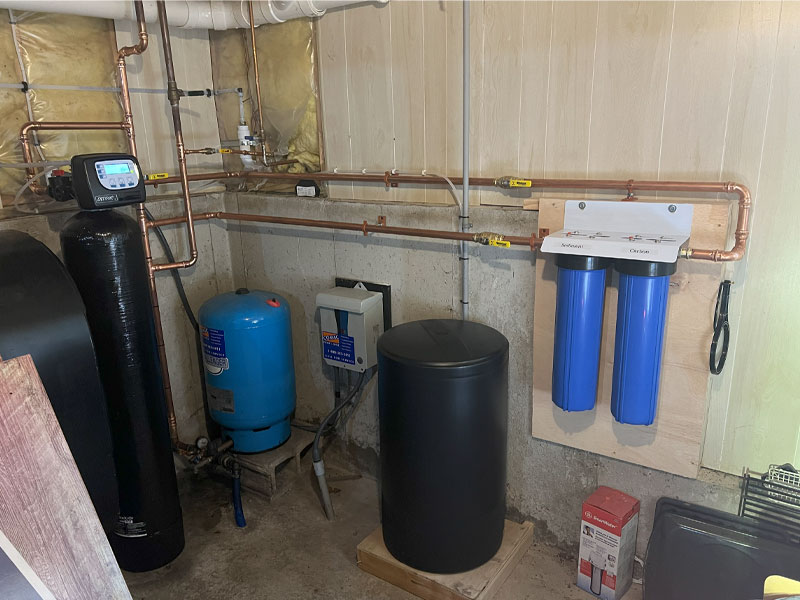
Whole-house water filtration treats the incoming water supply before it travels to fixtures throughout the home. The equipment used depends on what needs to be addressed. Sediment, hard water, acidity, and other water-quality concerns require different treatment methods.
Whole-house systems can also serve as part of a larger setup. A home may have equipment near the main water supply along with a separate reverse osmosis system at the kitchen sink.
Protect Water Heaters and Plumbing
The condition of your water can affect plumbing equipment over many years of use. Hard-water minerals can leave scale inside water heaters and on fixtures, while sediment can collect in equipment or interfere with smaller plumbing components. Acidic water presents another concern because low-pH water can contribute to corrosion.
Treating these conditions gives you better water while also reducing some of the buildup and wear associated with untreated water.

Choose Treatment for Your Water
Reliant Plumbing & Heating installs several types of water treatment equipment. Rather than choose a system based solely on a brand or product type, we can recommend equipment based on the condition of the water and the results you want.
Water Softeners for Hard Water
A water softener addresses calcium and magnesium hardness. These minerals are responsible for much of the scale homeowners find on faucets, showerheads, glass, and other surfaces that regularly come into contact with water.
Hard-water minerals can also accumulate inside water heaters and other equipment. A properly selected water softener reduces hardness before the water circulates throughout the home.
Acid Neutralizers for Low-pH Water
An acid neutralizer is designed for water with a low pH. Acidic water can be aggressive toward copper pipes and other plumbing components, which may contribute to corrosion over time.
The need for a neutralizer depends on the water itself. Once the water conditions are understood, we can determine whether pH treatment should be part of the home’s water treatment system.
Sediment and Carbon Filters
Sediment filters and carbon filters perform different jobs. A sediment filter captures suspended particles such as sand, dirt, and rust before they move farther through the plumbing. It may also serve as an early filtration stage ahead of other treatment equipment.
Carbon filters are used for different water-quality concerns, including certain tastes and odors. They can also reduce chlorine in appropriate applications. Both types of filters can be incorporated into a broader whole-house filtration setup when the water requires several forms of treatment.
Add Filtration for Drinking Water
Your drinking water may benefit from additional filtration beyond the treatment used for the rest of the house. Point-of-use systems provide another treatment stage specifically for water used at a particular fixture.
Reverse Osmosis Systems
A reverse osmosis system, or RO system, is commonly installed beneath the kitchen sink to provide filtered water through a dedicated faucet. Reverse osmosis uses a membrane along with other filtration stages to reduce many dissolved substances in drinking and cooking water.
An RO system can also work alongside whole-house equipment. For example, the main water supply may receive treatment for hardness or sediment while reverse osmosis provides additional filtration at the kitchen sink.
PFAS and PFOA Filtration
PFAS and PFOA concerns have led more homeowners to look closely at the quality of their drinking water. Specialized filtration options can reduce these contaminants when the appropriate equipment is selected.
A standard household filter should not be assumed to address every contaminant. The water results and the capabilities of the particular filtration equipment should guide the recommendation.
Build a Complete Water Treatment Setup
Several water-quality concerns can exist in the same home. In those cases, a complete treatment setup may include multiple pieces of equipment, each with a specific purpose.
Use Multiple Treatment Stages
Different treatment stages can complement one another. A sediment filter may capture particulate material before the water reaches other equipment. A water softener can address hardness throughout the house, while an RO system provides an additional level of treatment for drinking water.
The order of the equipment also matters. We plan the system so each treatment stage can perform its intended job within the overall plumbing setup.
Select Equipment for Household Demand
Water treatment equipment needs to keep up when several fixtures are in use. Household water demand, plumbing configuration, available space, and the type of treatment all influence equipment selection.
Proper sizing also affects flow and how frequently the system requires attention. Reliant Plumbing & Heating considers these practical details when recommending equipment for your home.
Water Treatment Equipment We Trust
Our team pays close attention to the products we install and the companies behind them. For water treatment work, Reliant Plumbing & Heating works with R.E. Prescott in Exeter, NH, a local water company with a broad range of residential treatment options.
Entipur Water Treatment Products
R.E. Prescott offers proprietary water treatment equipment under the Entipur brand. Available options include complete filtration systems, water softeners, acid neutralizers, sediment filters, carbon filters, greensand systems, ceramic filtration, and additional equipment for specific water conditions.
This range gives us flexibility when we recommend a system. We can select treatment according to what the water needs rather than trying to make one type of filter solve several unrelated problems.
Areas We Serve
Reliant Plumbing & Heating provides water filtration system installation in Hampton and throughout nearby communities in southern New Hampshire and northeastern Massachusetts. We serve homeowners in North Hampton, Hampton Falls, Seabrook, Exeter, Stratham, Rye, Greenland, Kingston, Newton, Salisbury, Amesbury, and surrounding areas. Call us at 978-689-5455 to discuss your water treatment needs or find out if we serve your community.
Water Filtration System FAQs
Can Water Filtration Treat My Entire House?
Yes. Whole-house water treatment equipment is installed on the incoming water supply so treated water can reach fixtures and water-using equipment throughout the home. The specific system depends on what needs to be addressed. A home with hard water, for example, requires different treatment from one with sediment or low-pH water.
How Do I Know If I Have Hard Water?
Hard water often leaves visible mineral scale on faucets, showerheads, glass, and other surfaces. You may also notice soap that does not lather as readily or recurring mineral deposits around plumbing fixtures. Water testing can determine the level of hardness and help establish whether a water softener would be useful.
What Is the Difference Between Carbon and Sediment Filters?
A sediment filter physically captures particles such as dirt, sand, and rust from the water. Carbon filtration serves a different purpose and can address certain tastes and odors as well as chlorine in appropriate applications. A treatment setup may use both because each filter addresses different water-quality concerns.
Can Acidic Water Damage Copper Pipes?
Acidic water can contribute to corrosion in copper piping over time. The condition is associated with low-pH water and may also affect other plumbing components. An acid neutralizer raises the pH as part of a properly designed treatment system. Testing the water helps determine whether acidity is present and whether treatment is appropriate.
Do I Need Whole-House Filtration If I Have an RO System?
An RO system and whole-house filtration serve different purposes. Most residential reverse osmosis systems treat water at a specific location, commonly the kitchen sink. Whole-house equipment treats the main water supply before it reaches fixtures and appliances. Depending on your water conditions and goals, either system may be appropriate, or the two may be used together.
What Maintenance Does a Water Softener Require?
Maintenance depends on the particular equipment, but conventional water softeners generally require homeowners to monitor and replenish salt. The system may also need periodic service based on its design, household water use, and incoming water conditions. We can explain the maintenance requirements for the equipment installed in your home.
How Does Reliant Plumbing & Heating Recommend a Water Treatment System?
Our process starts with a free sales call and a free water sample. We review the results and make recommendations based on what we find rather than assuming which equipment your home needs. Reliant Plumbing & Heating then sends you a quote for the recommended work, and you can decide how you would like to proceed.